
In the previous article i told about basic types of microphones. Now I want to talk about the key features of the majority of the microphones.

Sensitivity (mV/Pa)
This feature describes the ability of the microphone to transform the sound pressure changes into the electic current. In other words it helps us to understant what output voltage will with the certain sound pressure. So the higher the sensitivity, the more powerful signal will be on the output with the same sound pressure.
Directional characteristics
This is ability of the microphone to respond to the sound pressure changes regarding to the location of the sound source in a space. Directional characterics depends on the construction of the capsule, that’s the heart of each microphone.
Types of the capsules
There are two basic constructions of the capsules, closed-type and open-type.
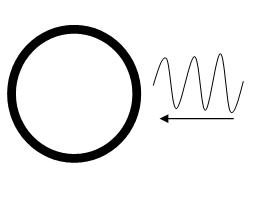
The closed-type capsules have a cylidrical shape.
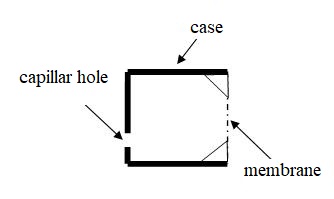
Into the capsule there is a constant pressure and all of the external pressure changes causes the movements of the membrane. When the sound wave in a positive phase then the membrane movements going inward the capsule and when the sound wave in a negative phase then the membrane movements going outward the membrane.
So the higher the amplitude of the oscillations of the sound wave, the higher the amplitude of the deflection from the internal constant pressure and therefore the higher the output voltage.
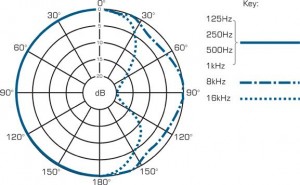
We may decide that the location of the sound source and the difussion of the sound wave doesn’t matter because the only factor that’s important for the capsules workflow is the sound pressure changes.
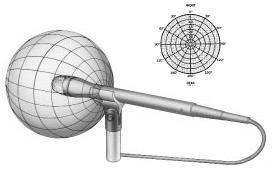
So we have a graphic that describes the omnidirectional characteristic of the close-type capsule microphones.
The explanation of the open-type capsule principle of working is pretty simple.
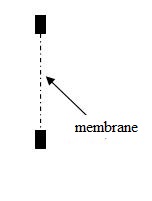
The sound pressure is carried out from both side.
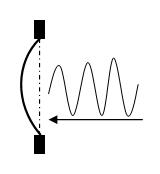
In the first case, the sound wave comes from the front side of the membrane. The pressure changes causes the movements of the membrane. In accordance to the phase of the wave the membrane will flex forward and backward.
In the other case, when the sound wave will comes from the opposite side, the same things happening.
But the third case is special. The sound wave is coming laterally and pressing down on the memrane from the both side so the membrane remain fixed and the signal is not getting out.
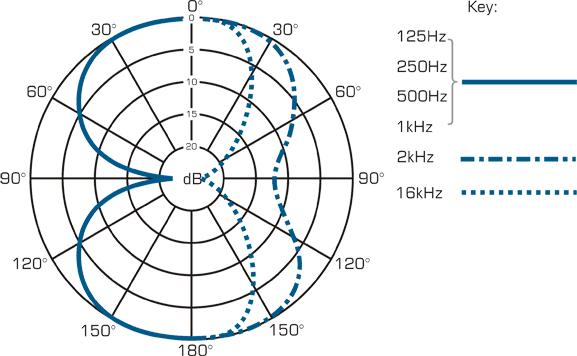
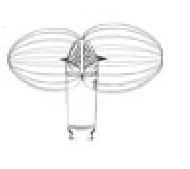
And thus we have this graphics of the directional characterictic that’s called
Figure of 8
Sources:
http://yoursoundpath.com/library/microphons/
https://znaytovar.ru/new2225.html






 Radio technology in music