
Hello. In the following articles we will talk a little more about pickups and its classification.
Previously i told about a history of the first electric guitar and emphasized an importance of invention of the first pickup.
But now we should go further, aren’t we? So let’s move on!
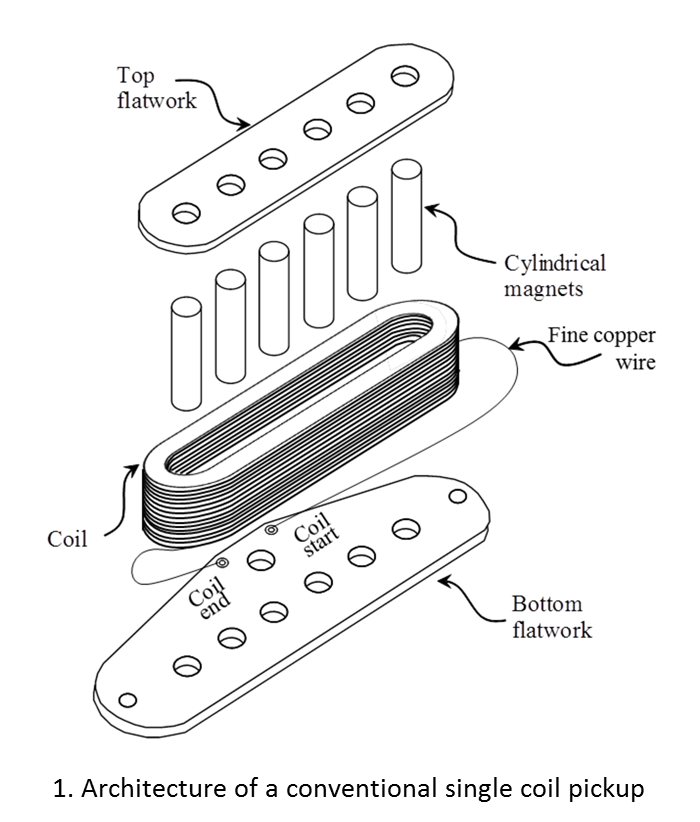
First, just a little bit about the key phisycs principle of working of the single coil pickup. So how do pickup work?
There are two main type of pickups: electromagnetic and piezoelectric pickup.
An electromagnetic pickup principle of working is based on the changing of the magnetic field through the string vibration. How does it work: the metal string is vibrate in the magnetic field that was caused by one (or two) permanent magnet. So it is caused a current appearance (an electric signal) into the coil that was made by the wire that was wounded on the given permanent magnets.
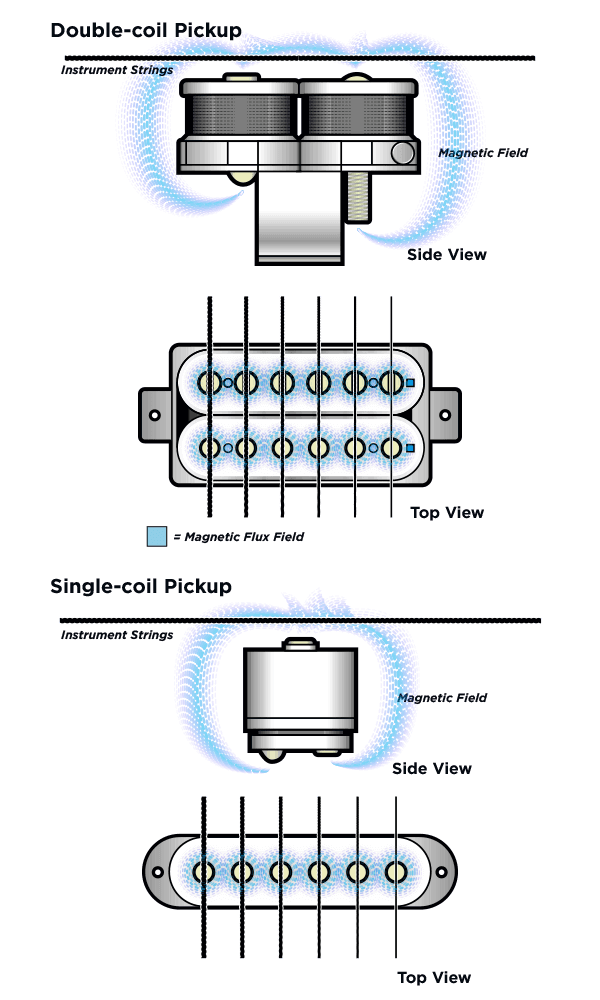
Also there are pickups which architecture is composed by two coil. Such pickups sre usually called Humbuckers. In this pickup each coil wound reverse to the other. And each set of magnetic cylinders is aslo opposite in polarity. This significantly reduces the level of the ambient hum through the cumulative of the signals from the each coil.
Let’s look to this simple graphs.
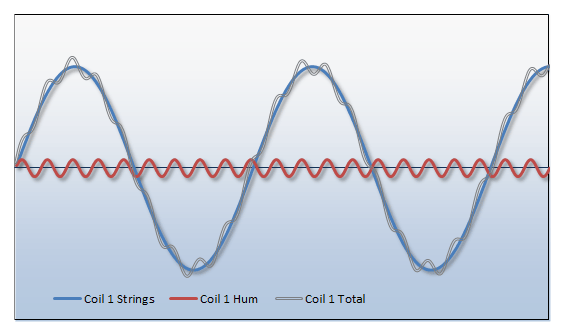
The signal we might get from a single-coil pickup.
What will happen if we’ll connected the second coil that will be completely out of phase with out original signal.
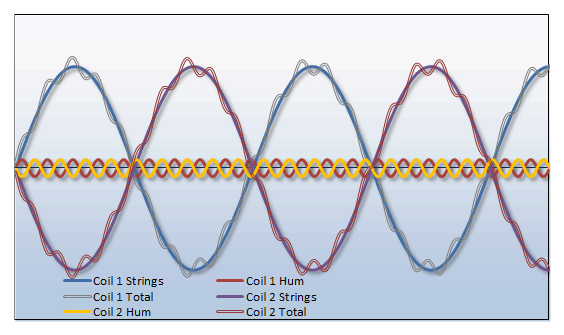
We need to cancel the hum. If we combine this with our original pickup, we’ll cancel out everything and end up with silence. But if we keep the winding but changing the polarity in one of the coils we can get signal like that:
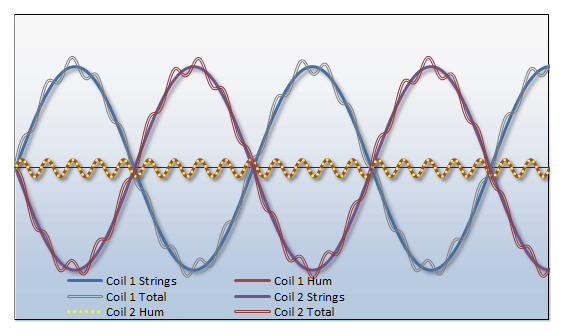
As we can see, signal from the strings was inverted, but hum wasn’t inverted. It’s happen because the hum is comes from other magnetic fields in the ambient, not from the magnetic field that was produced by the pickup.
In the next article I will talk about piezoelectric pickup. See you soon 😉
Sources:
https://www.seymourduncan.com/blog/the-tone-garage/how-hum-cancelling-works-part-1
 Radio technology in music
That was interesting!
НравитсяНравится